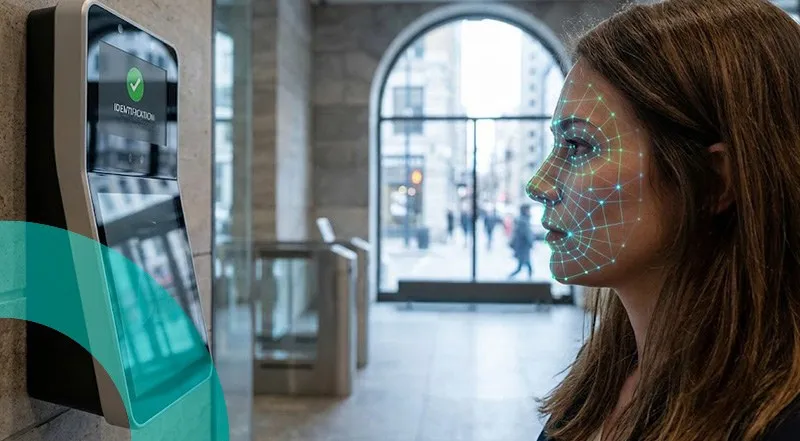
Facial recognition is a biometric technology used within access control systems to identify individuals when they seek entry to a site or a secured zone. Contrary to common misconceptions, this is not about continuous surveillance or tracking individuals; it is a onetime authentication, comparable to using a badge or a code, but without the need for a physical support.
How it works
During the enrollment phase, specific facial features are extracted and converted into a digital template. At the access point, a new capture is compared against this reference. If the matching threshold is reached, access is granted. This automated process ensures fast, seamless, and reliable identification.
Why choose facial recognition ?
Facial recognition stands out for its ease of use and fluidity, particularly in high-traffic professional environments. It eliminates the constraints associated with badges (loss, sharing, or fraud) while maintaining a consistent level of security.
Strictly regulated under GDPR and national frameworks
Biometrics can only be deployed within a strict regulatory framework, defined by the GDPR and relevant data protection authorities (such as the CNIL in France). The purposes must be clearly established, data must be protected, users informed, and alternatives provided whenever necessary. This framework ensures a responsible, transparent, and controlled use of the technology.
A mature access control technology
Today, facial recognition is a proven biometric solution, fully integrated into modern access control systems. When implemented compliantly and adapted to real operational needs, it becomes an effective lever for both security and flow optimization in professional environments.