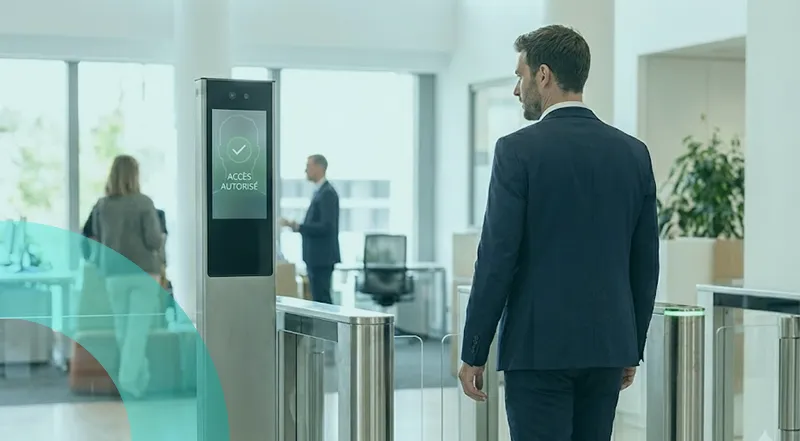
How does biometrics work?
Regardless of the modality used, the principle remains the same: during enrollment, specific characteristics are transformed into a digital template. At the access point, a new capture is compared against this reference. If the match is sufficient, access is granted. This process ensures reliable, fast, and consistent identification while limiting risks associated with the loss, lending, or theft of credentials.
Which biometric technologies are used?
Fingerprints and facial recognition are currently the most widespread in access control. Other modalities, such as iris or voice, are reserved for contexts requiring a high level of security. The choice always depends on site constraints, usage patterns, and the expected level of fluidity.
Usage strictly regulated by GDPR in Europe
Biometrics can only be deployed within a strict regulatory framework, defined by the GDPR and recommendations from authorities like the CNIL in France. Purposes must be clearly established, data protected, individuals informed, and alternatives provided when required. This framework guarantees a proportionate, transparent, and responsible use of biometrics in professional environments.
A mature technology serving access
Today, biometrics has established itself as a proven building block of modern access control systems. When implemented compliantly and adapted to real-world usage, it reinforces security while simplifying the daily experience for users.